

• Home
  • Articles
  • Podcast
    • Spotify
    • Apple Podcasts
    • iHeartRadio
    • Amazon
  • Shop
  • Beauty
  • eBooks
    • Carnivore Diet Beginner’s Guide
    • Animal-Based Diet Beginner’s Guide
  • Diet
  • Body
  • Wellness
  • About Us
0
The Hart of Health: animal-based nutrition, beauty, and wellness for real, specific seasons of life.
  • Home
  • Articles
  • Podcast
    • Spotify
    • Apple Podcasts
    • iHeartRadio
    • Amazon
  • Shop
  • Beauty
  • eBooks
    • Carnivore Diet Beginner’s Guide
    • Animal-Based Diet Beginner’s Guide
  • Diet
  • Body
  • Wellness
  • About Us
The Hart of Health: animal-based nutrition, beauty, and wellness for real, specific seasons of life.
0
The Hart of Health: animal-based nutrition, beauty, and wellness for real, specific seasons of life.
Animal-Based Nutrition

Become Superhuman by Eating Nutrient-Dense Animal Foods

Joané Hart
No Comments
February 28, 2022
4 Mins read
671 Views
Become Superhuman by Eating Nutrient-Dense Foods

In short: Animal foods give you a lot of nutrients in forms your body absorbs easily. This article looks at three standouts: liver, for protein plus vitamin A, vitamin B12, folate, iron and vitamin C; egg yolks, for choline, vitamins A, D, B6 and B12, iron and selenium; and salmon, for omega-3 fats, protein, magnesium and B vitamins.

Animal foods are the most nutrient-dense foods on earth. Don’t listen to someone who gives you a long list of plant foods to eat because they are “nutrient-dense”. Animal foods are the way to go if nutrient density is what you’re after.

Sure, plant foods might contain many nutrients, but the nutrients in plant foods are usually harder to digest and absorb. With animal foods, you don’t only get nutrient-dense foods, but you get them in an easily absorbable form.

Eating nutrient-dense foods can help you greatly in the quest to becoming Superhuman. I love dissecting the nutritional content of foods, researching the benefits of each micronutrient, and knowing how it can aid self-optimization (this is where my nerdy side reveals itself). I believe that we should focus on nutrients instead of just counting calories if we are going to try and become our superhuman selves. 

What you eat and what you choose to give your body is far more important than the amount of calories you eat, especially when you want to become superhuman. Calories are merely a unit of energy, and while important, it does not give any indication of the quality of the source of the calories you are consuming.

Nutrient-dense foods offer a large amount of nutrients in relation to their calorie content, and make it easier for you to get the macronutrients and micronutrients, such as essential vitamins and minerals, which you need in an efficient way. 

If most of the nutrients in your diet come from various nutrient-dense foods, you are giving your body a variety of nutrients from powerful sources, and will reduce your chances of developing any nutrient deficiencies. You will help your body get all of the nutrients it needs to thrive and perform optimally.

You will give your body the building blocks and energy to help you become the Superhuman version of you.

Here are a three of my favourite animal foods with the highest concentrations of nutrients: 

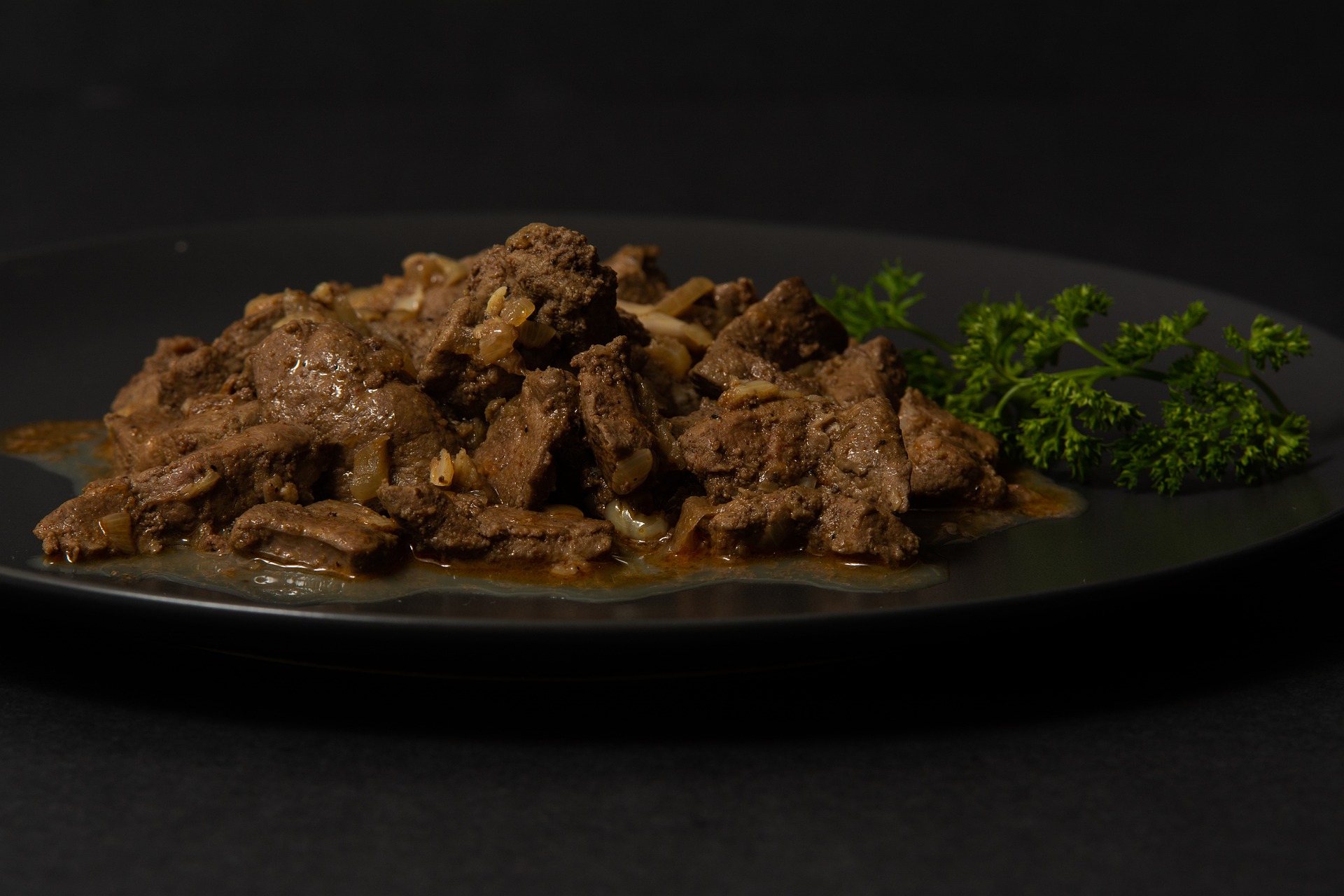
1. Liver: A Superfood for Superhumans

Some people do not like the taste of it, but liver is possibly the most potent superfood there is available. Not only is liver high in protein, but in terms of your recommended daily allowance of certain vitamins and minerals, a 100g serving provides you with a lot of vitamin C, iron, vitamin B12, folate, and vitamin A.

Most people do not get enough pure vitamin A in their diets from sources like egg yolks or liver. While beta-carotene, the carotenoid that your body turns into vitamin A is found in vegetables like carrots and butternut, the amount of vitamin A you get in the end may not be sufficient for your body to get optimal levels.

With these concentrated amounts of nutrients, consuming liver and other organ meats regularly might even replace the need for supplementation. 

2. Egg Yolks: You Can Finally Stop Eating Egg-White Omelettes

Eggs are some of the most nutrient-dense foods you can find, but that is only if you include the yolks. The yolks provide you with a good amount of fat, choline, vitamin A, vitamin D, vitamin B6 and B12, iron, and selenium. Even though egg yolks are high in dietary cholesterol, it is not something to be feared. Cholesterol is important for healthy hormone production. If you consume too little, you can start to experience hormonal problems. Eat your yolks.

3. Salmon for a Superhuman Brain and Body

As one of the best sources of omega 3 fatty acids, salmon was sure to make the list. It is also a very good source of fat, protein, magnesium, and vitamins B6 and B12. If you can consume it once or twice a week, that will be wonderful for your health and superhuman journey.

Diet can be very powerful on the quest for self-optimization. If you prioritize nutrient-dense animal foods in your diet, you might just be surprised to see how much your health and quality of life improve. Maybe nutrient-dense animal foods and following an animal-based diet is the missing key to you becoming superhuman.

Related reading

  • 12 Diet Tips for Optimal Mental Health and a Superhuman Brain
  • Marilyn Monroe Followed an Animal-Based Diet
  • The Benefits of Meat: The Centre of Our Primal Diet

Frequently asked questions

Why is liver called a superfood?

A 100g serving is high in protein and gives you a large share of your daily vitamin A, vitamin B12, folate, iron and vitamin C.

Should you eat the whole egg or just the white?

Eat the yolk. It holds most of the egg’s nutrients, including fat, choline, vitamins A and D, and selenium.

How often should you eat salmon?

Once or twice a week is a good goal, mainly for its omega-3 fatty acids.
Animal-Based Diet
Shares
Written by

Joané Hart

Joané Hart is the founder of The Hart of Health. She has spent 16 years researching nutrition and wellness, writes about animal-based eating, natural beauty and everyday wellness, and co-hosts The Hart of Health podcast. She holds a BA from the University of Pretoria and a Copy Editing Certificate from the University of Cape Town. Her articles are general information, not medical advice.
Previous Post

The Lion Diet Review: We Consumed Only Meat, Salt and Water for a Month | The Hart of Health Podcast

Next Post

The Real French Paradox: Why are the French So Much Healthier? | The Hart of Health Podcast

About Us

The Hart of Health

The Hart of Health: animal-based nutrition, beauty, and wellness for real, specific seasons of life.

Social Icons
FacebookInstagramPinterestTwitterTikTokYouTube
Most Popular

Can You Build Muscle on the Carnivore Diet?

Can You Build Muscle on the Carnivore Diet? Can you build muscle on a carnivore diet? If you’ve done some research about building muscle, you’ve probably come across the advice that you should eat carbs to help you gain muscle. This advice is pretty mainstream. Bodybuilder diets are often low in fat and high in carbs because they believe the carbs will help them build muscle. Those who don’t have aspirations of becoming bodybuilders and just want to gain muscle to look good and become stronger also typically opt for more carbs. This popular muscle-building diet approach has lead to many fearing that if they go on a low-carb diet like the carnivore diet, they’ll struggle to gain muscle. If you want to try the carnivore diet but you’re worried it will interfere with your goals, then hopefully I can put your mind at ease. How Do You Build Muscle? First, it’s important to understand what is required for your body to build muscle. To build muscle, you need to: Do resistance training and focus on progressive overload, which is when you make exercises harder by doing things like lifting heavier weights, slowing down your tempo, adding reps, and adding sets. Eat enough protein (aim for 1g to 1.2g per pound of body weight) Eat enough calories during the day and aim for maintenance calories or higher. You’ll struggle to build muscle if you're in a calorie deficit. If you prioritize fatty meat on a carnivore diet, it shouldn't be too hard to reach your calorie goals. Prioritise sleep and recovery: proper rest is very important for building muscle and helping your muscles repair. Sleep helps you produce more human growth hormone, which plays an important role in muscle building and strength. Do You Need Carbs to Build Muscle? Many voices in the health and fitness community will tell you that, in order to build muscle, you need to eat enough protein and load up on carbs. The carbs fill your muscles with glycogen for you to use during your workout, and eating carbohydrates can help your performance in the gym. But you don't need to eat carbs to help you build muscle, as long as you consume enough electrolytes, eat enough fat, and provide your body with the calories it needs. When you first switch to a low-carb diet like the carnivore diet and the keto diet, your performance when working out will likely decline for a few weeks while your body adjusts and becomes fat adapted. This is because you lose quite a bit of stored glycogen and you’re body hasn’t switched over to using fat as its main energy source yet. But once you are fat adapted, your performance when training should improve and it will become easier to build muscle. Where will you get glycogen from? Well, your liver produces it. And if you consume more protein than your body needs, it will turn it into glucose through a process called gluconeogenesis. But if you want, you can have carbs on a carnivore diet. I know, I know, many people in the carnivore community don't approve of the consumption of honey and dairy products but these come from animals and can definitely be included in a carnivore diet. So if you want the power of carbs to fuel you for your workouts, why not just have some honey or raw milk? If you can't tolerate dairy (like me), then you can get all the carbs you need from honey. You can be strategic and have your carnivore carbs before you train to give you energy and then again after to help restore the glycogen in your muscles. How Can the Carnivore Diet Help You Build Muscle? So many people who are trying to build muscle don't eat enough protein. You need to eat enough protein so your body gets the amino acids it needs to build muscle. If you've never tracked how much protein you consume in a day, you might be shocked to discover that you're not close to your protein goal of 1g to 1,2g protein per pound of body weight. If you're on a carnivore diet, you can easily get to your daily protein goal. Before I started doing The Lion Diet in January for World Carnivore Month, I struggled to reach my protein goals, but then once I started doing the carnivore diet, it became incredibly easy to reach this goal. Meat also provides you with a lot of creatine. Many people who are trying to build muscle will supplement with creatine because creatine helps give muscles more energy. Your levels of phosphocreatine will increase when you consume creatine, which your body then uses to make adenosine triphosphate (ATP). Creatine is found in meat. You can skip the supplements if you're on the carnivore diet due to the fact that you eat so much meat. A carnivore diet promotes healthy testosterone levels. Testosterone is very important for muscle building. If you consume a lot of sugar at once, it can significantly lower your testosterone levels (link). If you don't consume enough fat, your testosterone levels also won't be optimal since you need fat and cholesterol to produce it. Following a low-carb, high-fat diet like The Carnivore Diet can boost your testosterone levels, which will aid muscle growth. (link) Animal foods like red meat are also great sources of zinc, which your body also needs to produce testosterone. On the carnivore diet, you won't experience blood sugar fluctuations like you would on a high-carb diet. Stable blood sugar levels means stable energy levels, which means you'll perform better during workouts and can train harder. Your chances of experiencing a mid-workout energy dip are much lower on a carnivore diet. The Carnivore vs Vegan Diet The carnivore diet is far superior than the vegan diet when it comes to building muscle. First of all, animal foods are higher in protein than plant sources of protein like beans, nuts, rice and lentils. But, here is the truth. There are 20 amino acids your body needs to build muscle and 9 of them cannot be produced by your body, so you need to get them from your food. Foods that contain all nine essential amino acids are called complete proteins. There are no plant proteins that meet this criteria. You need to combine different plant protein sources (like mixing rice with beans) to get all the essential amino acids. But, meat and other animal sources of protein like cheese, eggs and yoghurt, are complete proteins. There's no combining necessary. Plant foods are also harder to digest. You definitely won't get the most out of the protein you're getting from plants. Meat and eggs are two of the easiest foods for the body to digest and get protein from. If you're on a muscle-building journey, why not try the carnivore diet for a few months and see how it affects your progress. I think it's also a great idea to do it if you were gaining muscle but have now hit a plateau. The carnivore diet could be just what you need to start seeing progress again and build that muscle you're after.

Interview with Lady Carnivory: Health Coach and Carnivore Recipe Developer

Seared steak medallions served on a white plate

Following a Carnivore-Ish Diet: What You Can Eat, the Benefits of an Animal-Based Diet, and More | The Hart of Health Podcast

Following a Carnivore-Ish Diet What You Can Eat, the Benefits of an Animal-Based Diet, and More The Hart of Health Podcast S1 E25
Categories
Animal-Based Nutrition
Natural Beauty
Body & Movement
Holistic Wellness
Featured Posts
Dream Body

29 Bad Diet Tips You Shouldn’t Follow 

May 2, 2022
Animal-Based Nutrition

The Antinutrients and Toxins in Plant Foods

April 25, 2022
Animal-Based Nutrition

Why Nuts Aren’t Healthy

April 18, 2022
Newsletter
Product categories
Animal-Based Diet Cycle Syncing Digital Products Fitness The Carnivore Diet Weight Loss
You might also like
The Antinutrients and Toxins in Plant Foods
Animal-Based Nutrition

The Antinutrients and Toxins in Plant Foods

4 Mins read
April 25, 2022

In short: Antinutrients are compounds in some plant foods that interfere with how you absorb other nutrients. This article covers six groups: oxalates (in foods like spinach and beetroot), phytates (grains, nuts and seeds), lectins, saponins (quinoa, oats and legumes), goitrogens and glucosinolates (cruciferous vegetables like broccoli and cauliflower) and tannins (coffee, tea and legumes). …

Why Nuts Aren’t Healthy
Animal-Based Nutrition

Why Nuts Aren’t Healthy

6 Mins read
April 18, 2022

In short: I no longer eat nuts, and this article explains why. Nuts contain antinutrients like oxalates, phytates and lectins, which can make minerals harder to absorb, and they’re high in linoleic acid, an omega-6 fat. After two months of daily stomach pain that went away when I cut out nuts, I stopped seeing them …

Counting Macros on an Animal-Based Diet
Animal-Based Nutrition

Counting Macros on an Animal-Based Diet

6 Mins read
April 4, 2022

In short: You don’t have to count macros on an animal-based diet, but it can help. Tracking lets you experiment with your protein-to-fat ratio, make sure you’re eating enough fat and keep fruit in check. Most people eating this way end up high in protein and fat, with carbs kept fairly low. Do macros still …

Copyright: The Hart of Health
The Hart of Health: animal-based nutrition, beauty, and wellness for real, specific seasons of life.
  • Terms of Service
  • Privacy Policy
  • Health Disclaimer
The Hart of Health: animal-based nutrition, beauty, and wellness for real, specific seasons of life.
  • Home
  • Articles
  • Podcast
    • Spotify
    • Apple Podcasts
    • iHeartRadio
    • Amazon
  • Shop
  • Beauty
  • eBooks
    • Carnivore Diet Beginner’s Guide
    • Animal-Based Diet Beginner’s Guide
  • Diet
  • Body
  • Wellness
  • About Us
About Us

The Hart of Health

The Hart of Health: animal-based nutrition, beauty, and wellness for real, specific seasons of life.

0